
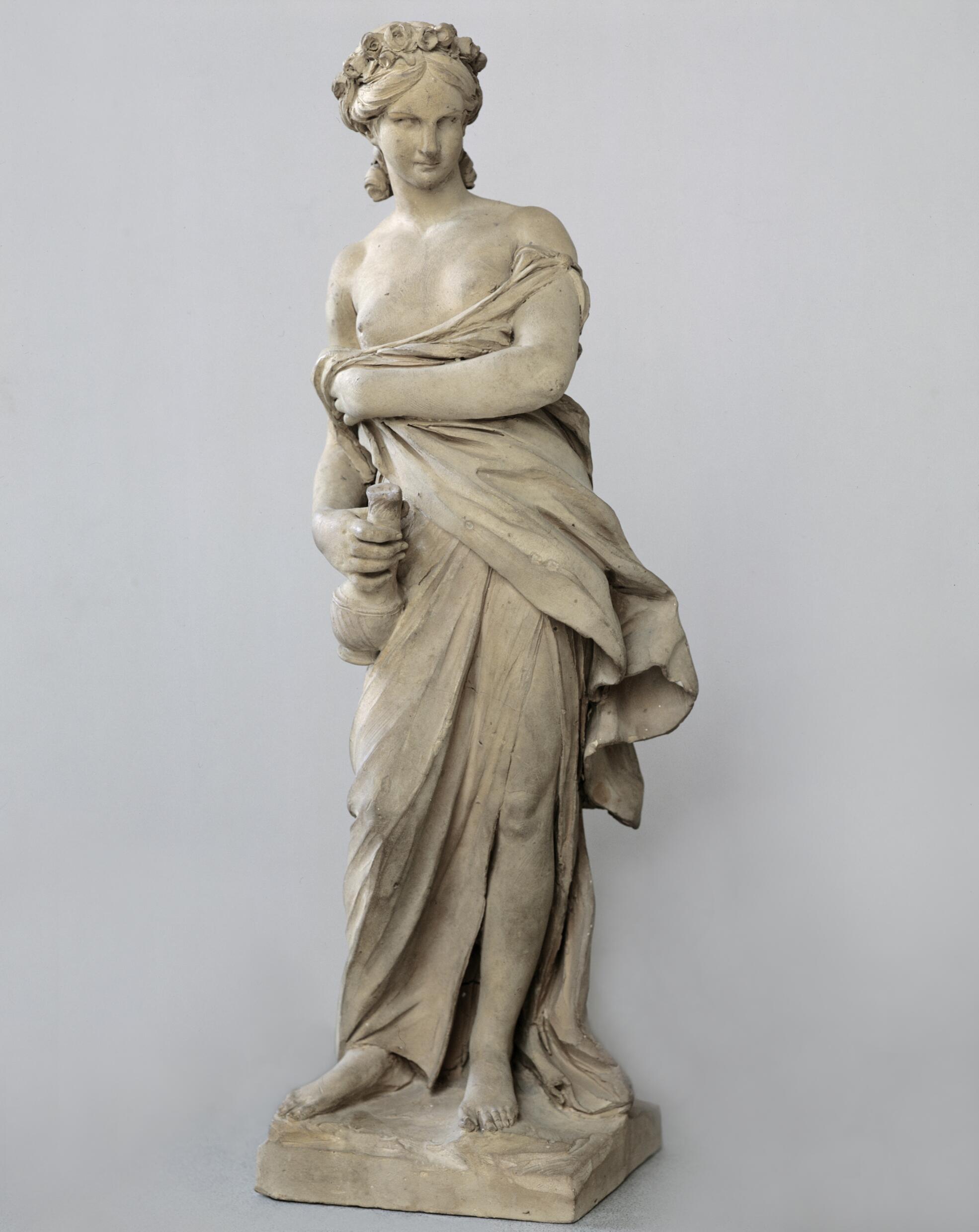
“Ah! What a graceless Hebe! The one who pours nectar for the Gods, the beverage that sparks eternal joy in divine souls; and yet she is sad and bored. The artist has chosen the moment Ganymede was accepted into the rank of the Gods.” These were the words of Diderot – author of the Encyclopaedia and one of the pioneers of art criticism – to describe this terracotta sculpture.
Look at Hebe’s spinning movement; it refers to her fall during a banquet – an act that caused Hebe to lose her position as cupbearer on Mount Olympus to Ganymede. Denigrated at the Salon, this bozzetto, or model, was the preliminary work for a life-size marble sculpture made the same year for the Duke de Choiseul, minister of Louis XV. This feminine model dressed in drapery, heralds the sculptures of the nine muses at the Grand Théâtre in Bordeaux. The original version, today housed in the Museum of Decorative Arts and Design in Bordeaux, was made by the academician artist some 20 years later when he was at the height of his career.