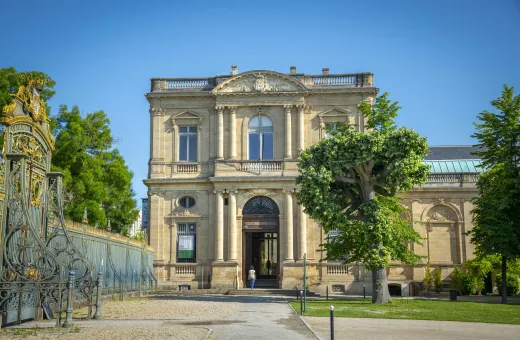
One of the oldest collections of fine art in the Nouvelle-Aquitaine region
Image principale
Image
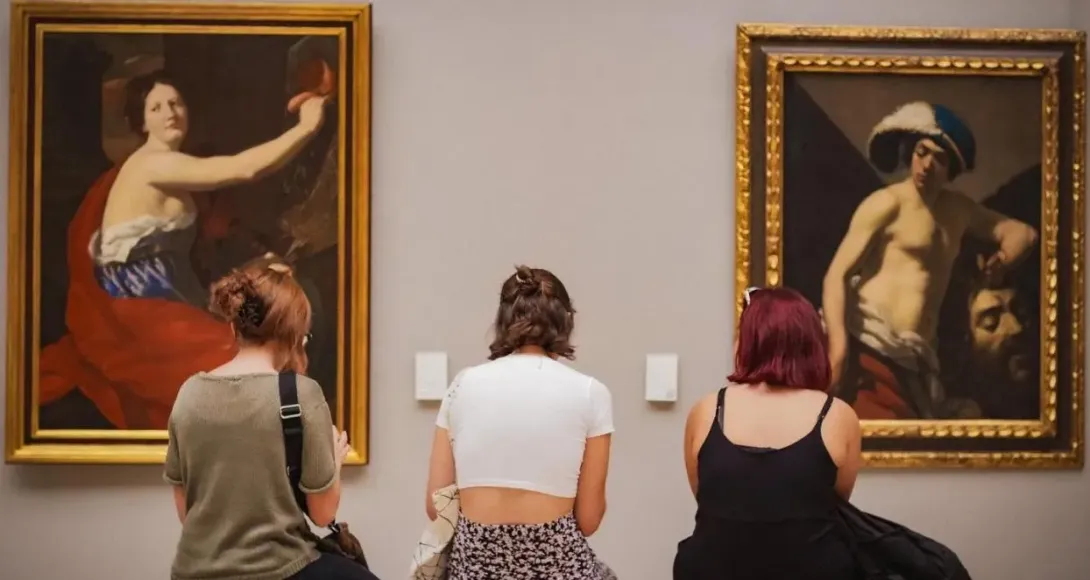
The museum today
The experience of observation and curiosity
Conteneurs
Zone de contenu
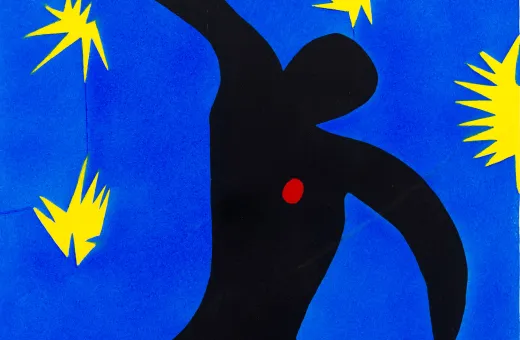
The Musée des Beaux-Arts de Bordeaux (MusBA), classified as a Musée de France, offers visitors a vast overview of European art from the 15th to the 20th century, with works by famous artists such as Titian, Veronese, Rubens, Van Dyck, Chardin, Delacroix, Corot, Picasso and Matisse, as well as important collections including works from the 17th-century Dutch school. The collections also feature extensive bodies of work by three famous artists from Bordeaux: Redon, Marquet and Lhote.
With over 8,400 works (paintings, sculptures and graphic arts), it is one of the major fine arts collections in the Nouvelle-Aquitaine region. The collection has national and international renown, with around 200 loans made each year to museums in France and abroad, partnerships and co-productions of exhibitions with major institutions, and active participation in networks such as FRAME (the FRench American Museum Exchange), of which it is a long-standing member. Research initiatives in partnership with other museums and universities, as well as joint research projects (publications, symposiums, etc.) are regularly undertaken.
Texte avec ancre
A museum in action: exhibiting, exploring, promoting
Texte
Exhibiting...
Under the impetus of its director Sophie Barthélémy, the Musée des Beaux-Arts has been organising ambitious exhibitions since 2015, four of which have been recognised as “Exhibitions of National Interest”, such as Rosa Bonheur (1822-1899), co-produced with the Musée d’Orsay, which attracted more than 72,300 visitors in 2022. These exhibitions explore original topics in art history and highlight artists who have sometimes been unjustly overlooked. They are presented at the Galerie des Beaux-Arts (located opposite the museum, on Place du Colonel Raynal).
Regular displays of works from the museum’s collections are also presented in the Actualités room (Lacour wing) and in the permanent exhibition in both wings of the museum. Finally, the museum offers a wide range of events, in partnership with local, national and international institutions.
...Promoting
The museum is sensitive to social issues and has been working alongside the City of Bordeaux for several years to promote inclusion and gender equality, a commitment that is evident in its exhibitions (Rosa Bonheur, Elles sortent de leur(s) réserve(s), Valérie Belin), tours and exhibitions. With female artists such as Lavinia Fontana, Marguerite Gérard, Rosa Bonheur, Berthe Morisot, Mary Cassatt and Alice Halicka, the museum is committed to increasing the presence of female artists in its permanent exhibition and programme.
The museum is also a home for artists. Since its creation, it has been a place designed to promote interact with contemporary creation. At the museum’s invitation, living artists regularly come to engage with the masters of the past. Examples include exhibitions by Valérie Belin (2024), Denis Monfleur (2023), Suzanne Lafont (2018/2019) and Erik Samakh (2017).
The MusBA pursues a policy of commissioning contemporary works, such as the Détails project designed with Bordeaux artist and graphic designer Franck Tallon. Following on from Detail #1 and Detail #2, which symbolically connect the two wings within the museum’s garden, Detail #3 has occupied the museum’s exterior façades for several years, providing a real focal point for the museum. It can be seen from the Cours d’Albret and the adjacent streets.
For the future...
Texte
Enhancing the collections
The museum has developed an acquisitions policy that is firmly rooted in the local area, focusing on figures such as Redon, Marquet, Dupas, Lhote, Lacour, Lacoste and Tobeen. It endeavours to enrich its collections from the 18th to the 20th century, with a particular focus on the Neoclassical, Romantic and Art Deco movements, as well as the relationships between art, music and the theme of the Bacchanalia, which illustrate the strong link between the Gironde city and the world of wine.
Its collections also include foreign schools, Italian, Spanish, British and Nordic, reflecting the European dimension of the history of the city and the museum. The museum is also working to enrich its 17th-century collections, particularly in French Caravaggisti and classical painting.
A sustainable museum...
With its primary mission being to preserve and restore its collections, the museum embraced the concept of sustainability early on, with a view to passing on these collections to future generations.
The MusBA is aware of environmental issues and is also committed to ecological transition and digital sobriety. It was involved in discussions on the creation and development of the City of Bordeaux’s cultural resource centre, a project it has supported since its inception and with which it is still associated through occasional initiatives. This innovative scheme promotes reuse of resources, encouraging the city’s cultural institutions to reuse existing materials where possible, adapting them for use in their exhibitions. This reflects a strong desire to reconcile high standards of museum design with ecological transition, in line with the city’s roadmap for culture. The MusBA also pays particular attention to reducing its carbon footprint through its loan policy and the reuse of materials and furnishings for the scenography of its exhibitions.
In recent years, the museum has recognised the need for in-depth reflection on digital sobriety and the importance of developing sustainable practices, mindful of the impact that certain tools can have on ecological transition.
Finally, the museum is currently being assessed for certification under the NF Environnement Sites de visite standard.
...committed to the ecological transition on a daily basis
All movements of works, whether for borrowing or lending out, are carefully studied in order to minimise the ecological footprint of transport methods, while ensuring the preventive conservation and security of the works.
The museum also promotes everyday environmentally-friendly practices among its staff and visitors, and shares these initiatives in the form of illustrated stories to encourage collective participation in this sustainable approach.
to be enjoyed by all ages!
Texte
From 0 to 99 years
The MusBA offers an inclusive, intergenerational mediation programme designed to promote access to art.
The museum’s programme includes guided tours, literary siestas, shared perspectives, tours in French sign language, multi-sensory tours and offbeat tours (featuring music, dance or poetry/slam), offering visitors a different way to discover the works, with an approach that is deliberately open to all disciplines and all audiences.
The MusBA also has a dynamic mediation policy, particularly aimed at younger generations. The aim is to encourage these future visitors to discover and engage with the museum: to learn, understand the works, express their emotions, escape, be captivated by the beauty and expressive power of a work and, above all, to have fun!
The museum is a place for everyone, from babies to seniors, as reflected in the Super Guide for Grandparents! tour, which gives older people the keys to understanding so they can visit again with their families, or the museum’s participation in the Môm’Art association’s “Musées joyeux” (Happy Museums) network.
Something for everyone!
The museum is also committed to a multidisciplinary programme, with an active cultural policy rich in partnerships with artists and cultural institutions of all kinds, including museums, associations, art centres, bookshops, art schools, libraries, opera houses, conservatories, and more.
It regularly opens its doors in the evening for events such as afterwork sessions, Nuit du dessin drawing sessions, the European Night of Museums, and also offers multidisciplinary events: concerts, giant dictation exercises or performances that offer a new perspective on the collections and exhibitions. Every year for the past 10 years, the museum has organised the Bacchanight, a festive and cultural event celebrating student creativity through its collections and exhibitions. Although aimed at young people, over the years this event has become one of the highlights of Bordeaux’s cultural life.
Finally, in 2022, the museum adopted a new visual identity and redesigned its website in 2025. Since the Covid crisis, it has been developing a dynamic digital mediation strategy, supported by its social networks and a community of committed influencers.
that raises awareness
Texte
100% EAC
In 2022, Bordeaux became the first major French city to obtain 100% EAC (Artistic and Cultural Education) certification, awarded by the Ministry of Education and the Ministry of Culture.
The MusBA is deeply committed to Artistic and Cultural Education, and sponsors three schools : Jules Ferry, Barbey and Balguerie in Bordeaux. These sponsorships raise awareness of art from an early age, with a view to cultural appropriation. All pupils participate in educational programmes at the museum and benefit from artistic practice through projects jointly developed by artists and teaching staff. At the end of the programme, the pupils’ work is displayed in the museum.
Sponsorship
Between 2022 and 2024, pupils from Jules Ferry school in Bordeaux Caudéran worked on modelling and producing a stop-motion film as part of the exhibition Denis Monfleur. Peoples of stone (2023). Each class took a tour of the museum focusing on plant life, followed by a tour of the exhibition. The 200 pupils from nursery and elementary schools then met with visual and artistic creation professionals to create La Cacophonie du Petit Peuple.
For the period 2023-2025, MusBA is also sponsoring Barbey school (Bordeaux Sud). All the pupils visited the exhibition Valérie Belin. Les visions silencieuses and are working on an innovative artistic project with a visual artist and choreographer.
In 2025–2026, Jules Ferry School continued its journey with the Impressions du vivant project, carried out with two artists and enriched by visits to the MusBA.
With Laurent Cerciat, primary school pupils explored the diversity of living things in the school garden and created a collective installation. With Clémentine Pace, preschool and primary school pupils experimented with different forms of portraiture through drawing, painting, Chinese ink and monotype.
The EAC programme will continue in 2026–2028 in the Grand Parc neighbourhood with Balguerie School, co-developed with the collective of illustrators and graphic designers Calk. Pupils will be invited to share their own perspectives and words on the museum’s collections, creating unconventional and playful museum labels.
that cares
Texte
Even before ICOM – the International Council of Museums – introduced the concept of inclusivity into its new definition of museums in 2023, the MusBA has consistently fought against all forms of exclusion and discrimination – social, cultural, geographical or medical – by supporting original initiatives to take the museum beyond its own boundaries and reach out to “distant” audiences (excluded or disadvantaged people, prisoners, hospital patients, elderly people) and minorities such as the LGBTQIA+ community. In 2019, it was awarded a ministerial label recognising its efforts to bring the museum to the public: “Le musée sort de ses murs”.
Since July 2012, the museum has also carried “Tourisme & Handicap” certification, demonstrating its commitment to welcoming all visitors and providing accessibility for all.
at the museum...
In 2023, the museum hosted Please Touch! This exhibition, in collaboration with other French museums in the FRAME network, was designed to teach visitors how to touch as well as how to look. It was intended not only for people with visual impairments but also for the general public. Yoga and Qi Gong sessions were scheduled throughout the permanent collection spaces to offer sensory experiences.
Among its other initiatives, the MusBA regularly hosts narrative medicine tours and tours for seniors, accompanied by an art therapist, for visits and artistic workshops aimed at improving mental and emotional wellbeing.
...and beyond the walls, in neighbourhoods
Since the beginning of 2025, the museum has also been travelling to the city’s priority neighbourhoods to offer intergenerational drawing classes, as part of new partnerships.
...in hospitals
Since 2015, the museum has been developing projects in hospitals, in partnership with the Cadillac and Charles Perrens psychiatric centres and the Bordeaux University Hospital, to raise awareness among audiences who are unable to physically come and see the collections or exhibitions.
Regular art workshops are organised for patients, in close collaboration with the healthcare teams. There are many objectives: improving patients’ quality of life, promoting their artistic expression and opening up the museum and hospital to the community.
The works produced within this framework are exhibited alternately in the municipalities of the partner institutions and at the museum. They are sometimes published in the form of objects (cards, notebooks, etc.). The museum also works with the residents and senior citizens in residential care homes for the elderly (EHPAD).
...in prisons
Access to culture is part of the integration or reintegration process for individuals under the supervision of the justice system. It is now recognised as a right.
Since 2015, the MusBA has been working closely with the Gradignan Prison, in conjunction with the penitentiary service for integration and probation (SPIP), to offer art history and artistic practice workshops to male and female prisoners, both on remand and convicted, numbering more than 400 to date. This initiative has been developed in collaboration with local cultural organisations and with the support of the decentralised services of the Ministry of Culture. The creations produced are displayed in thematic exhibitions or collective art projects.
Lecteur video
Lecteur video
Légende
Film réalisé par Fygostudio société de production audiovisuelle à Bordeaux (https://fygostudio.com/).