During the Second World War, nearly 100,000 items belonging mainly to Jewish families, Freemasons and opponents of the Third Reich regime were stolen by its dignitaries. Adolf Hitler personally entrusted the task of looting artworks to Otto Kümmel, curator of Germany's national museums.
The primary objective was to repatriate all works of art of German origin created since the 16th century, but greed led to the systematic looting of private and public collections in all countries annexed by the regime.
The Führer wanted to exhibit masterpieces of European art on German soil with a view to rewriting art history in line with Nazi ideology. Reflecting Hitler's delusional megalomania, a vast museum was also planned in Linz, Austria, the city where Hitler spent part of his childhood. The plans for this vast architectural complex, which was to be called the Führermuseum, envisaged housing more than 4,000 paintings!
The looted works not selected for the Linz project were transferred to other museum collections of the regime that were already promoting fascist ideology.
In France, in response to the cultural desecration suffered during the Occupation, some pieces from the national collections were evacuated from Paris and hidden in estates in the south-west of the country. Those that had already been seized in the capital were stored by the SS in the rooms of the Louvre, but the space quickly became too small and the Jeu de Paume museum, located on Place de la Concorde, was also requisitioned by the regime.
At the Jeu de Paume, Rose Valland (1898-1980), a curator and member of the Resistance, worked secretly and at the risk of her life to compile an inventory of the collections, tracking down these stolen works that had been deported to Germany. Her invaluable work in identifying and locating these works made it possible to recover many art objects after the defeat of the Third Reich.
In the aftermath of the Armistice, most of the looted works, as well as those acquired on the art market between 1939 and 1945, known to the Office of Private Property and Interests and the Artistic Recovery Commission, were recovered. In 1949, of the 61,233 objects returned to France, more than 45,441 were returned to their rightful owners or direct heirs. However, despite this significant restitution effort, more than 13,000 items were never claimed and were sold by the French state.
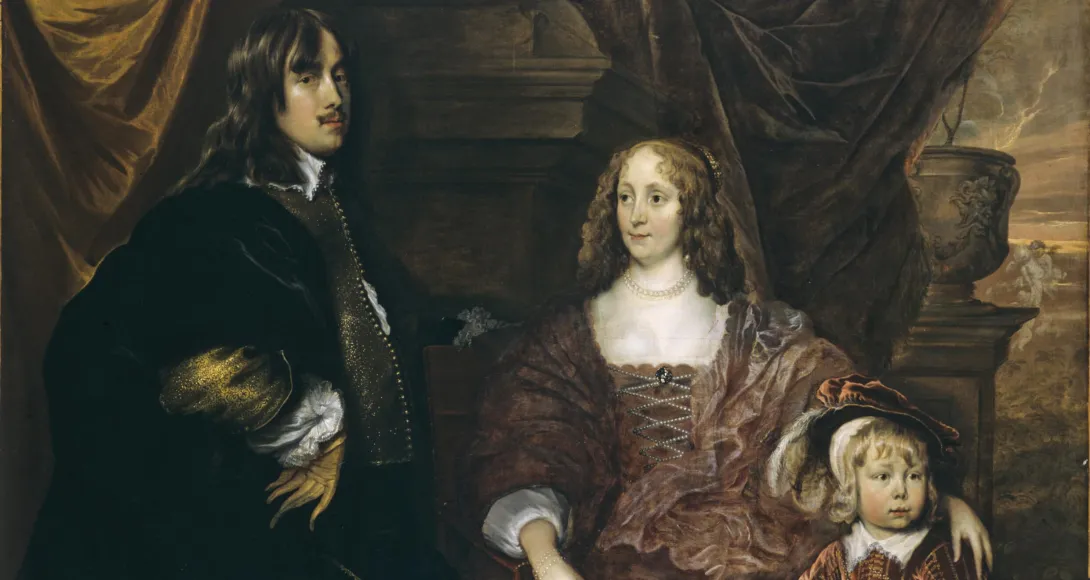
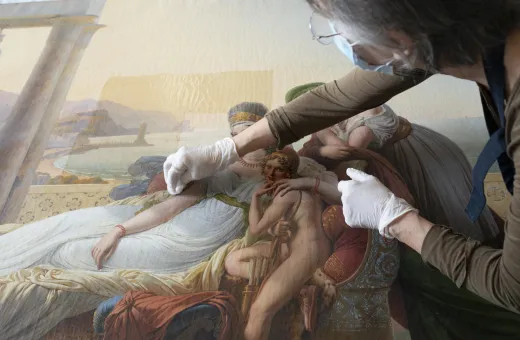
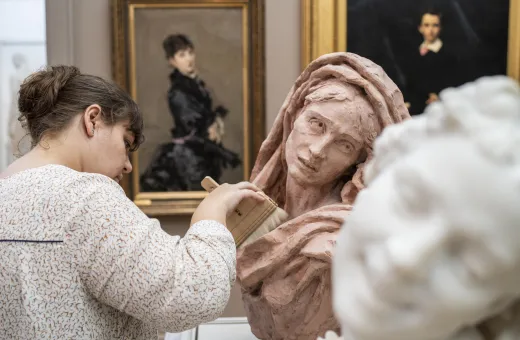
The administration kept only 2,143 looted objects. These were entrusted to the National Museums and recorded in provisional recovery inventories, hence the acronym MNR or ‘Musées nationaux récupération’ (National Museums Recovery) assigned to them. Displayed in various museums in France, works listed as MNR can be claimed at any time by their rightful owners, descendants or heirs, provided they have supporting documentation. Legally, as defined by the decree of September 30, 1949, these works do not belong to the State, which is only their temporary custodian.