
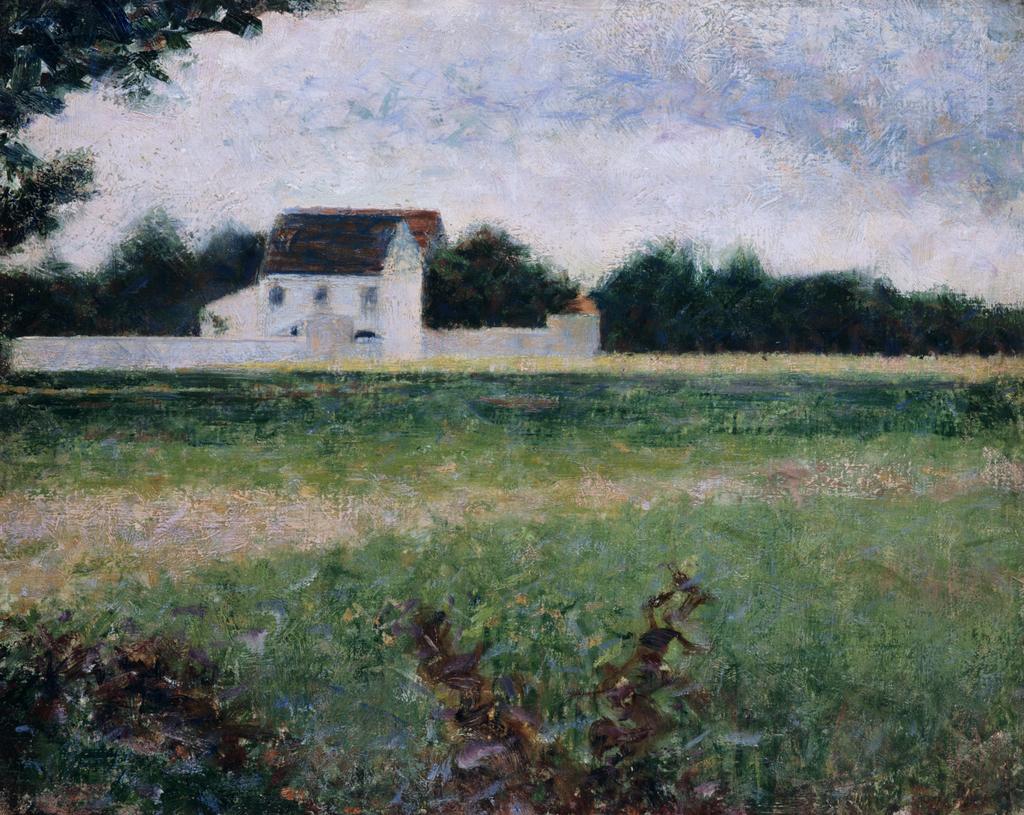
Georges Seurat made this Landscape in the Ile de France very early on in his career between 1881 and 1882. At this period, he adhered firmly to Impressionist themes, favouring landscapes and genre scenes, reminiscent of the Barbizon School of painters and followers of Corot. Seurat nicknamed the small formats he did around this time his “croquetons”. This painting highlights Seurat’s experimentations with brushwork at that period. He was greatly influenced by Delacroix who specialized in optical mixes. Here, the painter has used what he called a “sweeping” effect made up of very lively criss-cross brushstrokes “that look like chopped-up straw” adding a certain voluptuousness to this landscape.
Rapidly, the painter moved away from spontaneous representations and put a scientific method in place, influenced by contemporary treaties on optics and light. These experimentations expressed themselves in touches of paint that resembled miniscule dots of pure colour. This technique was known as divisionism or pointillism. Seurat died at the young age of just 31, the victim of diphtheria. Despite his short life, he is considered by the avant-gardes to be one of the major artists of the late 19th century.