
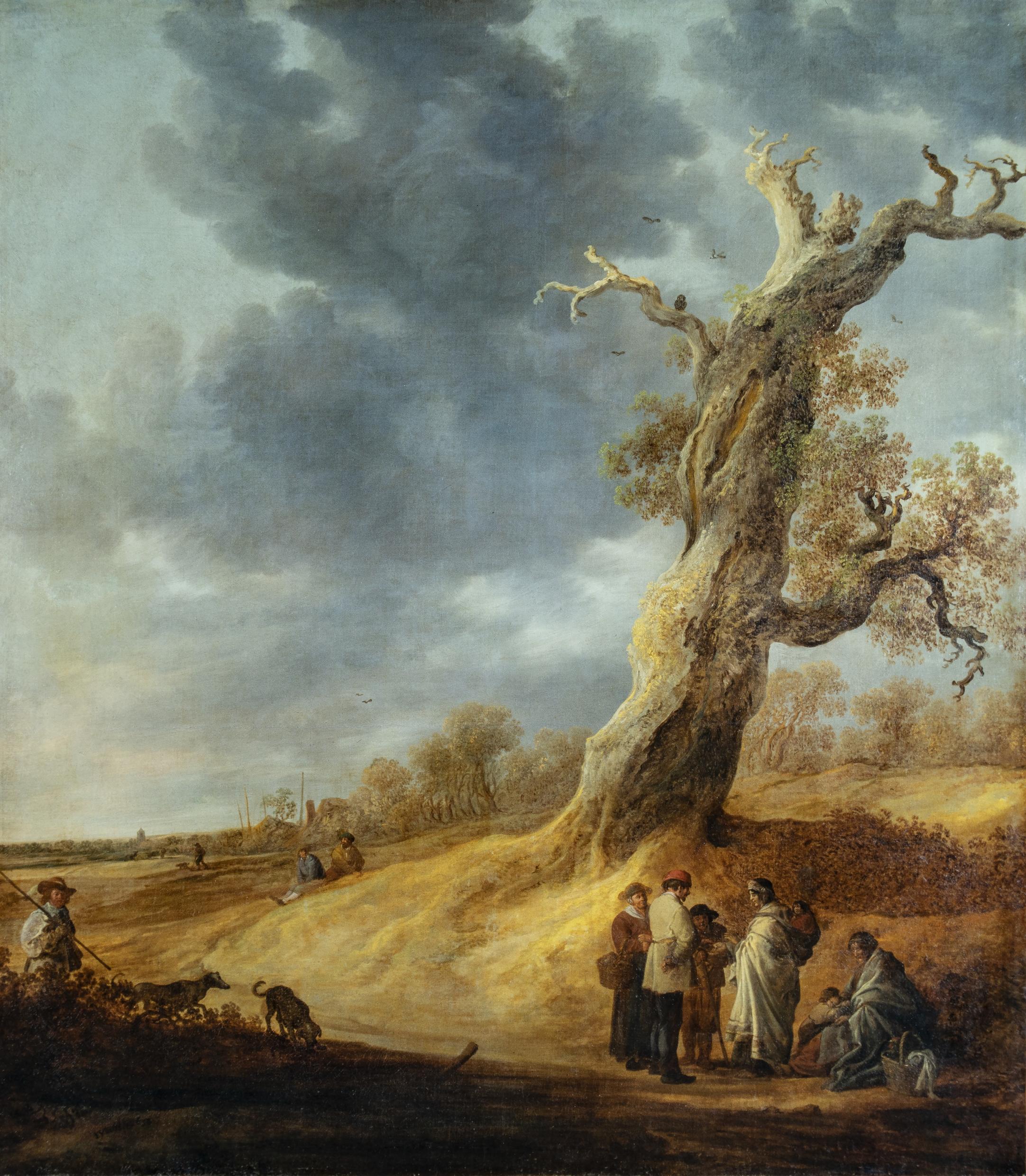
This painting is one of the Dutch painter Jan Josephsz van Goyen’s masterpieces.
It is characteristic of the quasi-monochrome style he developed between 1633 and 1644 in The Hague, after initially training in Haarlem. A highly detailed view opens out into a vast panorama set under a menacing sky and structured around this thunderstruck tree. The range of colours is reduced down to shades of yellow and grey and moves towards a monochrome palette. In front of the tree, a picturesque scene shows a bohemian-looking figure reading the palm of a villager in the open countryside.
On the left of the composition, the artist draws our attention to his own self-portrait in the guise of an elegant gentleman walking his dogs. A Christian man, van Goyen was not content here just to describe the picturesque scene. Several noticeable details reveal the allegorical vocation of this landscape. For example, the red of the man’s beret symbolizes his inability to ignore superstition. The owl, perched in full daylight on a bare, dead branch of the oak tree, represents man’s blindness to chiromancy, a practice forbidden by the Church. And lastly, the lightening evokes divine punishment.