
Vanity of vanities, all is vanity!
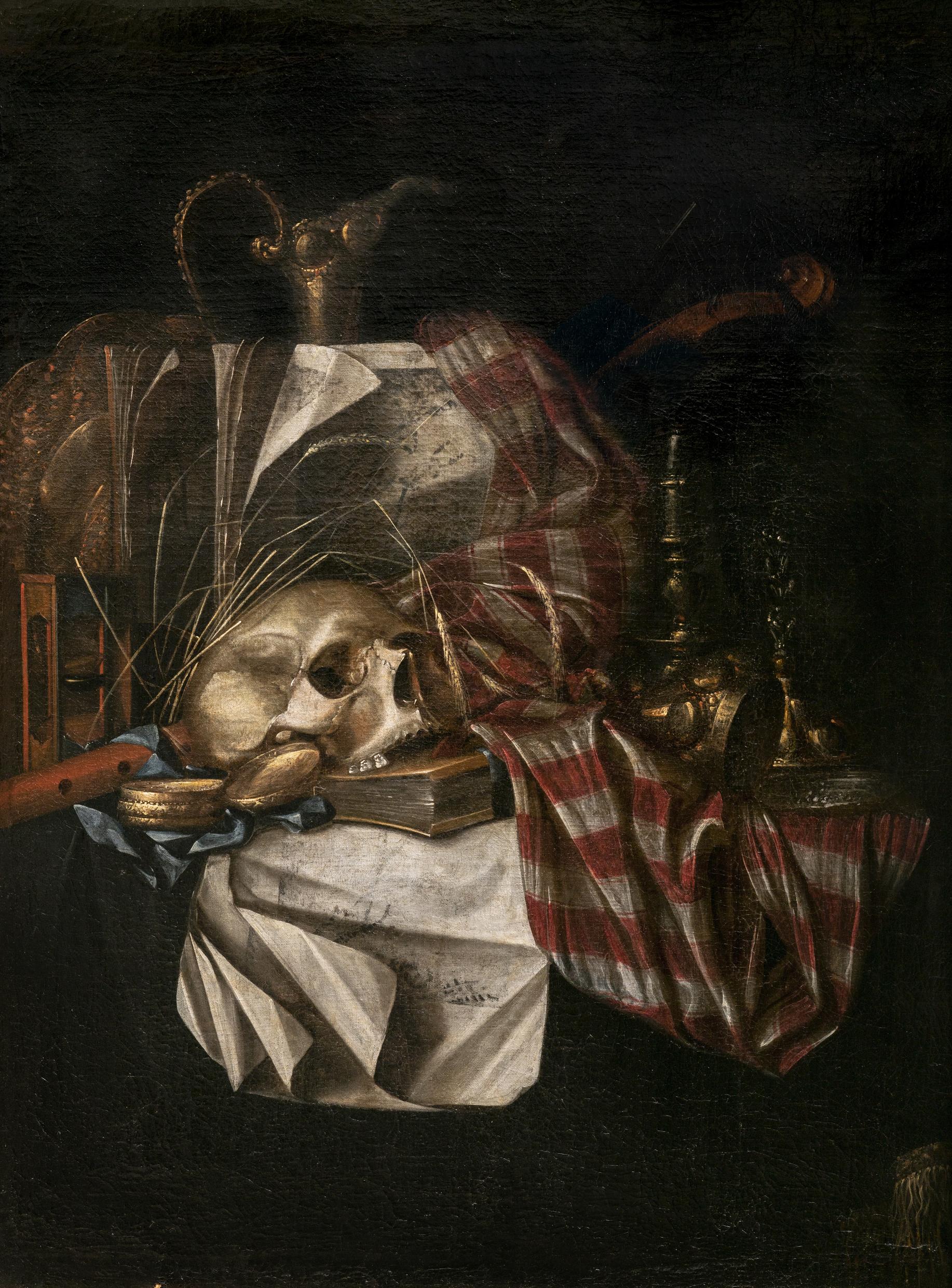
The painters of the Northern School really perfected the art of the vanity, or still-lifes with a moralizing character. In this work, the painter and master of trompe-l’œil, Cornelis Nobertus Gysbrechts, wanted to make us think about the vanity of terrestrial pastimes. The morbid and grimacing presence of a toothless skull is an allusion to the transitory and ephemeral nature of human life along with the hourglass and watch, objects for measuring time.
The sumptuously painted fabrics and objects, made from precious materials, refer to the vanity of riches and power whilst the musical instruments and upturned tankard of wine echo the vanity of earthly pleasures. On the far left, the flute alludes to the seductions of love and fleeting enjoyment. Fortunately, the painting equally suggests the hope of salvation with the ear of wheat representing resurrection and eternal life. The hour of death is not counted for those who have led a virtuous life on earth.
The spectators of the time would have understood all of these symbols perfectly thanks to books of emblems and they could have easily deciphered the implicit moral of the work!