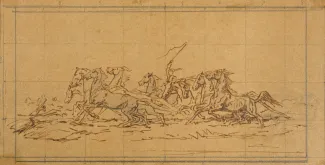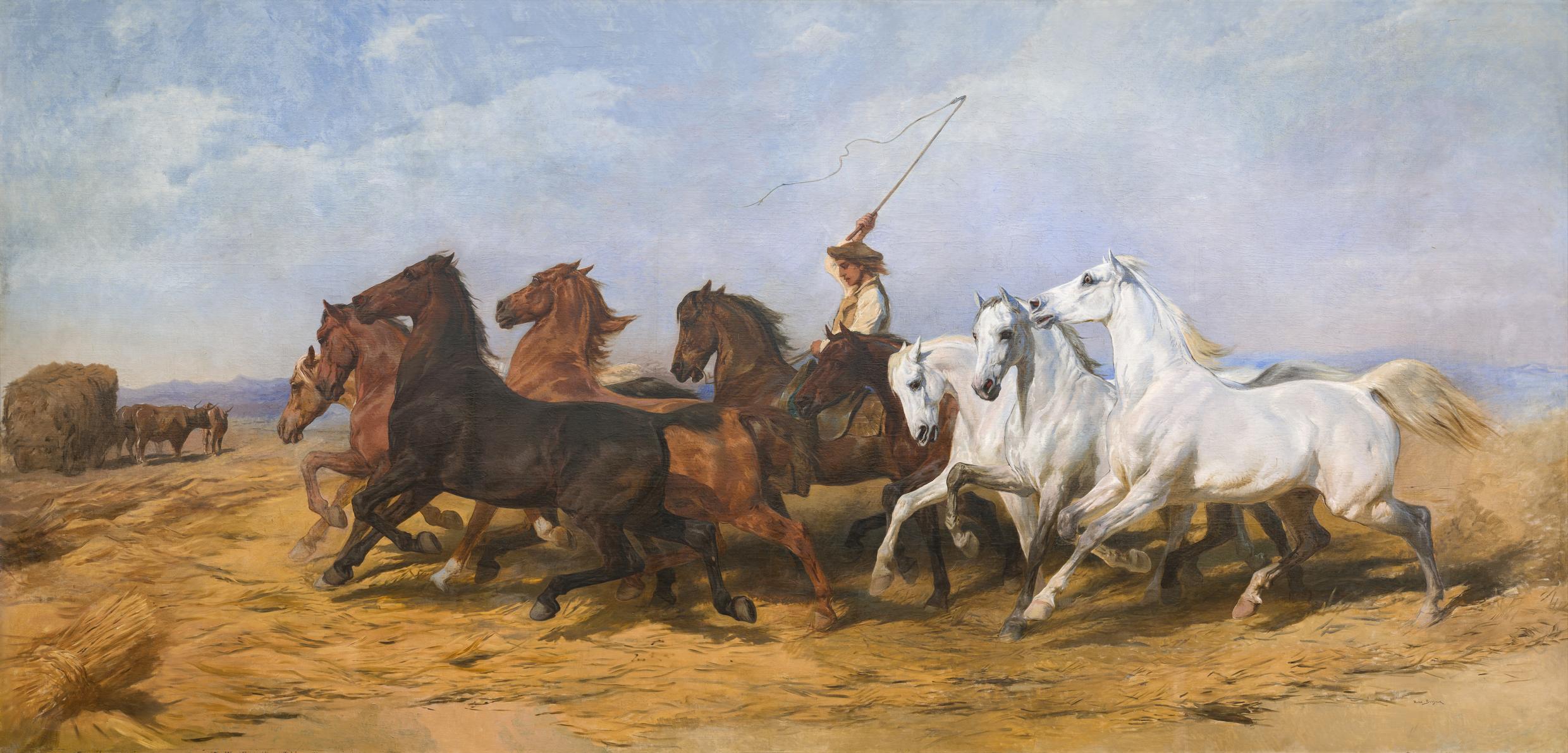
You are now in front of one of the largest works in the collection; Wheat Threshing in the Camargue, painted by Rosa Bonheur in the second half of the 19th century.
Born in Bordeaux in 1822, the artist was an eminent animal specialist. Here, she depicts the beauty and force of the semi-wild horses used by Camargue farmers for threshing wheat. In this team of horses, the three white ones attract the light whilst the darker ones gallop ahead, directed by the farmer’s whip. Rosa Bonheur emphasizes both their belonging to the rural world, to farm life, whilst at the same time exalting their power. Some important commissions along with the death of the artist in 1899 meant this work was never finished.
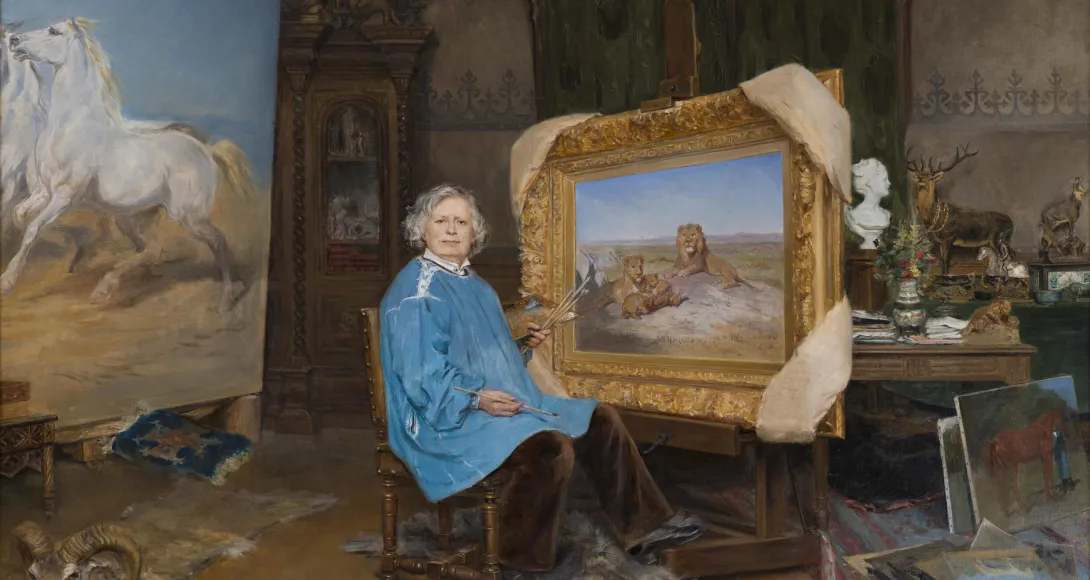
The Museum of Fine Arts also houses the portrait of Rosa Bonheur in her studio, painted by Georges Achille-Fould, where you can see a detail taken from this monumental painting. The artist is portrayed wearing trousers which were forbidden at that time for women. But Bonheur argued for authorisation from the prefecture to wear them during her drawing sessions at the slaughterhouses! Passionate about animals, Rosa Bonheur had a whole menagerie, including a lion, quails, dogs and even some sheep. The press at that time evoked her trousers and cigars in an attempt to explain the “virility” of her painting.
For her contemporaries, Rosa Bonheur was truly a phenomenon! Her talent was recognized in 1865 when she became the first female artist to be awarded the Legion of Honour.